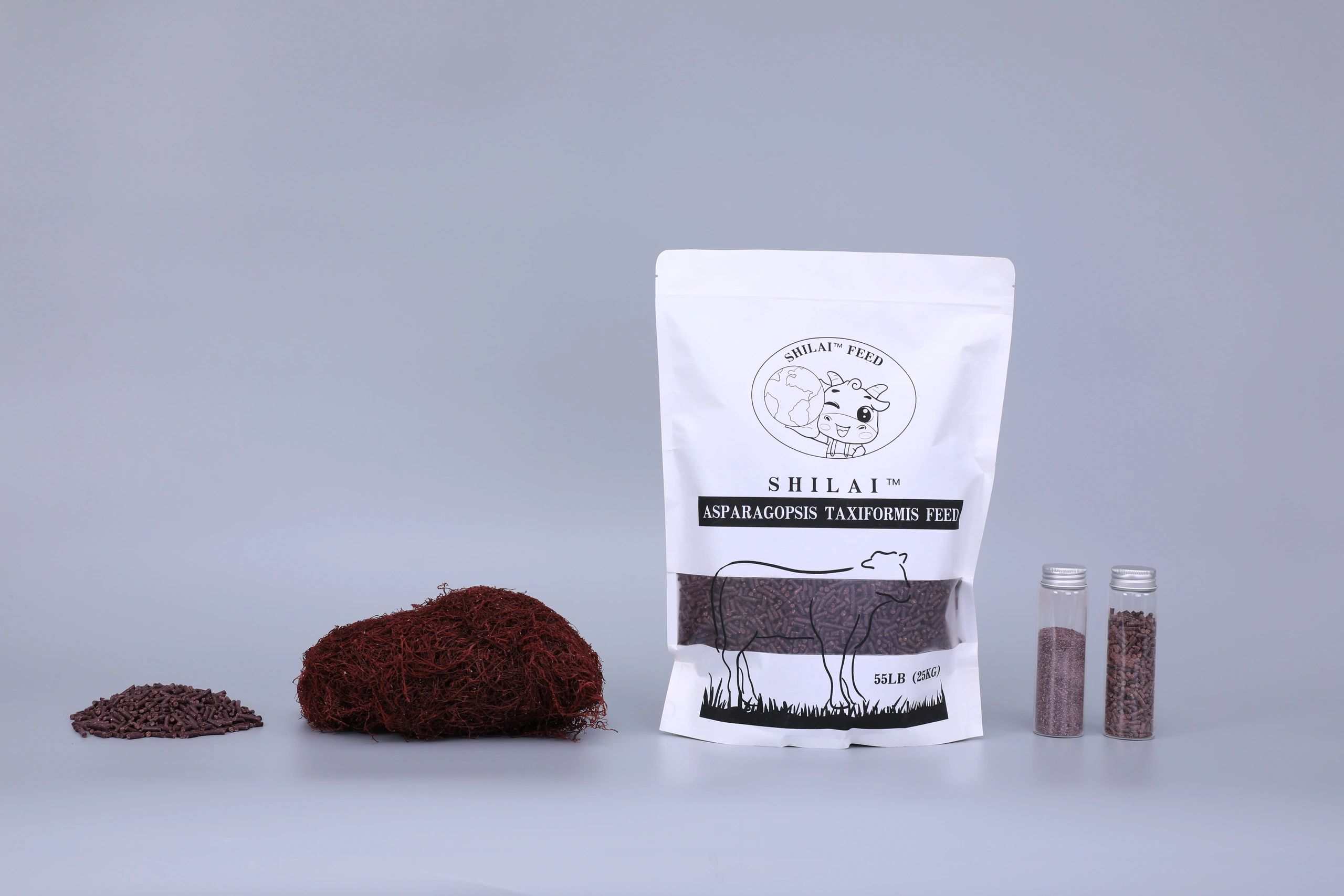
The global agricultural sector is a major source of greenhouse gas emissions, especially from livestock farming.
Due to its much greater warming potential relative to carbon dioxide, methane emissions are a high-priority target for mitigation.
Researchers are investigating Asparagopsis taxiformis, a red marine alga, as a potential breakthrough for reducing methane from ruminants.
By supplying a molecule that suppresses rumen methanogenesis, the seaweed reduces livestock methane output.
Adding Asparagopsis taxiformis to feed rations has yielded encouraging outcomes in early trials, pointing to a practical route for cutting agricultural greenhouse gases.
- In addition to methane cuts, Asparagopsis taxiformis brings several beneficial side effects for farm operations.
- Better feed efficiency
- Opportunities for economic growth in rural communities
Continued study and commercial testing are required, however Asparagopsis taxiformis could be a transformative sustainable solution.
Tapping the Value of Asparagopsis taxiformis Powder for Livestock Diets
Concentrates and powders of Asparagopsis taxiformis present a realistic route to operationalize its feed application benefits.
The seaweed’s composition includes valuable nutrients and active molecules that can improve productivity metrics.
Employing A. taxiformis powder in feed mixes has achieved methane declines in trials and may improve micronutrient profiles.
Further rigorous research is crucial to optimize dosage, processing, and long-term safety to unlock full commercial potential.
Asparagopsis taxiformis: Toward More Sustainable Livestock Systems
This red seaweed is gaining attention as an approach to address environmental problems tied to conventional animal agriculture.
Using the algae as a feed ingredient offers a pathway for farmers to reduce methane and improve the environmental profile of production.
Research findings indicate the seaweed may also enhance productivity and health markers in livestock alongside emission cuts.
More work to verify long-term safety and logistical viability is necessary, though early findings look promising.
Methane Reduction Through Asparagopsis Feed Additive
Scientists identify Asparagopsis as a credible method to reduce methane generation within the rumen of ruminants.
Active substances in the algae modify rumen microbial dynamics, thereby reducing methane production.
- Controlled research has shown notable methane declines in animals fed Asparagopsis in trial settings.
- Using the seaweed in feed formulations is a sustainable pathway to cut enteric methane emissions.
- There is growing industry momentum toward trialing Asparagopsis as part of feed strategies.
Asparagopsis: Seaweed Driving New Directions in Animal Agriculture
An oceanic innovation is emerging as Asparagopsis taxiformis demonstrates potential to materially reduce methane from cattle and sheep.
- Researchers adding Asparagopsis to rations observed substantial methane declines, indicating major environmental benefits.
- The approach may enable more sustainable food systems that reduce emissions while maintaining farm productivity.
As climate policy and industry responses develop, Asparagopsis offers a promising option to reduce livestock methane emissions.
Optimizing Feed Formulations with Asparagopsis taxiformis for Greater Methane Cuts
Investigations focus on ideal extraction, stabilization, and dosing to maximize the methane mitigation benefits of A. taxiformis.
The Science Behind Asparagopsis taxiformis's Methane-Lowering Effects
The observed methane reduction results from the seaweed’s compounds that hinder the growth and function of methanogenic microbes.
The presence of bromoform is a likely mechanism for methane suppression, prompting ongoing study into dosage, residues, and safety.
Adding Asparagopsis into Rations to Support Sustainable Livestock Systems
Asparagopsis offers both nutritive value and active molecules that together justify its consideration for feed formulations.
Using the algae in diets can boost nutrient supply, aid digestive function, and impart beneficial antimicrobial attributes.
Asparagopsis taxiformis as a Nature-Based Path to Greener Food Production
Asparagopsis taxiformis is emerging as a notable marine-derived option to help address climate and environmental challenges in food systems.
- In addition, Asparagopsis provides nutrient advantages that strengthen feed quality.
- Researchers and practitioners are investigating diverse applications of the species across farming and food industries.
Widespread incorporation of Asparagopsis into feeds could materially lower the environmental burden of livestock farming.
Enhancing Animal Health and Productivity with Asparagopsis Feed Additives
Asparagopsis is increasingly recognized as a promising feed supplement that may improve both animal health and productivity.
Research indicates potential gains in digestive efficiency and feed conversion ratio from Asparagopsis inclusion, supporting growth outcomes.
The seaweed’s bioactives may provide antioxidant and immune-support effects that support animal robustness and disease resistance.
The momentum behind sustainable livestock practices enhances the appeal of Asparagopsis as studies and commercialization advance.
A Sustainable Trajectory: Methane-Cut Feeds Based on Asparagopsis
As the agricultural sector seeks pathways to emissions reduction, Asparagopsis stands out as an implementable methane mitigation measure.
- Studies attribute the methane decline to interference with methanogenic microbes by compounds present in the seaweed.
- The experimental record includes promising findings of large methane cuts when Asparagopsis is incorporated into feeds.
This feed innovation could help shift food production toward lower emissions and greater climate resilience.
